A good outdoor speaker system should sound balanced from the first chair to the far end of the patio. Achieving that result is less about buying the highest wattage and more about planning listening zones, speaker positions, amplification, power and cable routes before installation.
Use this guide to design a practical system for a patio, deck, garden, pool area or large backyard.
Start with listening zones, not speaker models
Draw a simple plan of the outdoor space and mark where people spend time. Typical zones include a dining table, lounge seating, grill, pool, garden path or fire pit. Ignore areas where nobody needs music.
Next, decide whether all zones should play together or whether you want independent control. A single compact patio may need only one stereo pair. A long yard or several separated activity areas may benefit from four speakers or multiple zones.
Step 1: Map the space
Record the following before shopping:
- The approximate shape and size of each listening area.
- Available walls, eaves, posts, fences or landscape beds.
- Nearby power outlets and a dry location for any amplifier.
- Safe routes for power cable or outdoor-rated speaker wire.
- Potential noise-sensitive directions, including neighboring homes.
- Sources of water, irrigation, heat, foot traffic and garden equipment.
This map will tell you whether wall-mount, rock or mixed speakers make the most sense.
Step 2: Choose the system architecture
Powered Bluetooth pair
A powered Bluetooth pair is a straightforward choice for one patio or deck zone. Music streams from a phone or tablet, and amplification is built into the system. You still need to plan power access and the connection between the two speakers.
The Herdio 6.5-inch Bluetooth Outdoor Speaker Pair provides two weather-resistant speakers with adjustable brackets for a defined outdoor listening area.
Passive speakers with an amplifier
A passive system places the amplifier in a protected location and runs speaker wire to each speaker. This architecture is useful for fixed installations, longer service life and layouts with several speakers. Match amplifier capability, speaker impedance and wiring according to the equipment manuals.
Complete multi-speaker system
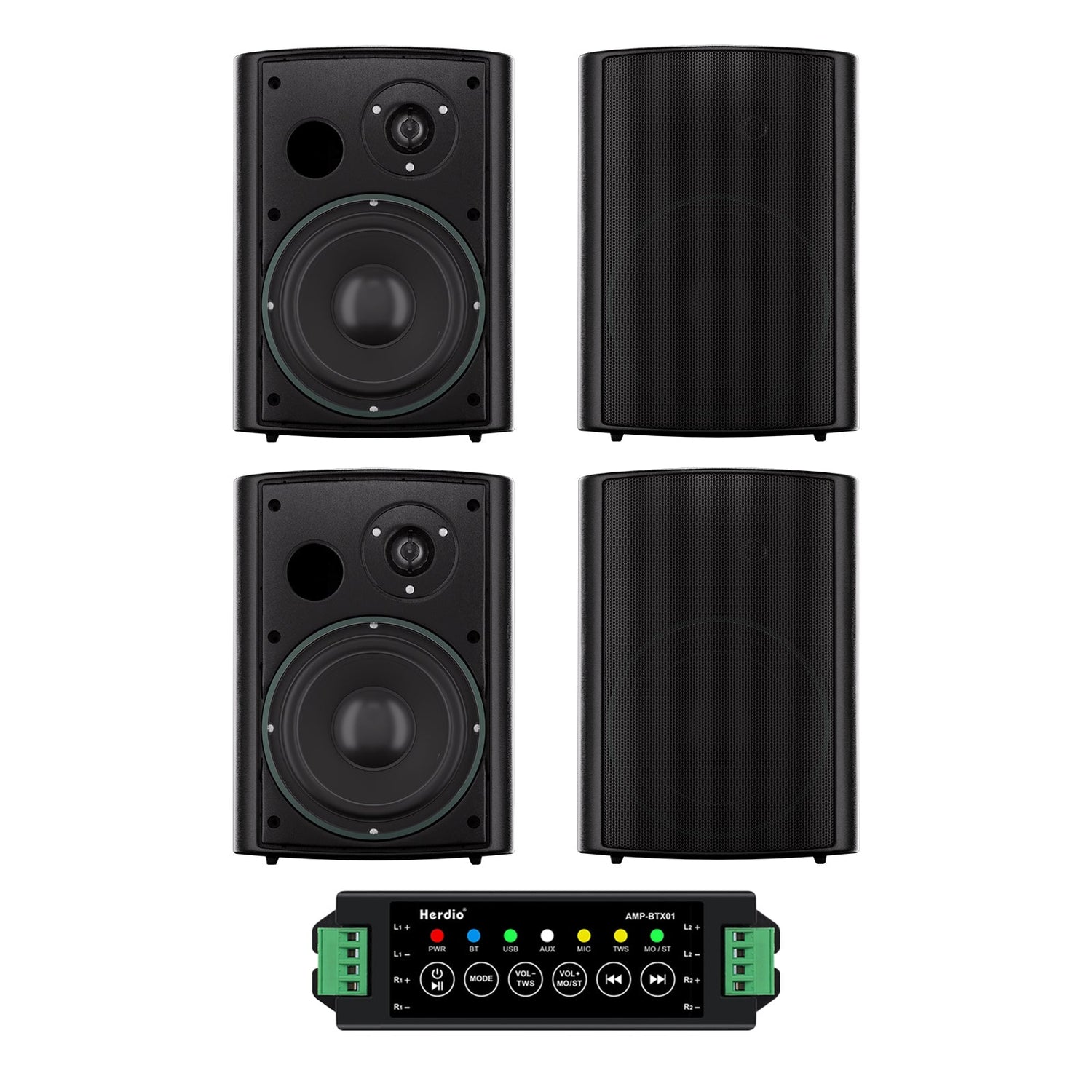
A complete package reduces the guesswork of matching components. The Herdio 6.5-inch Four-Speaker Outdoor System with Amplifier is designed to spread sound across large patios, yards, pool areas and commercial outdoor spaces.
Rechargeable or solar rock speakers
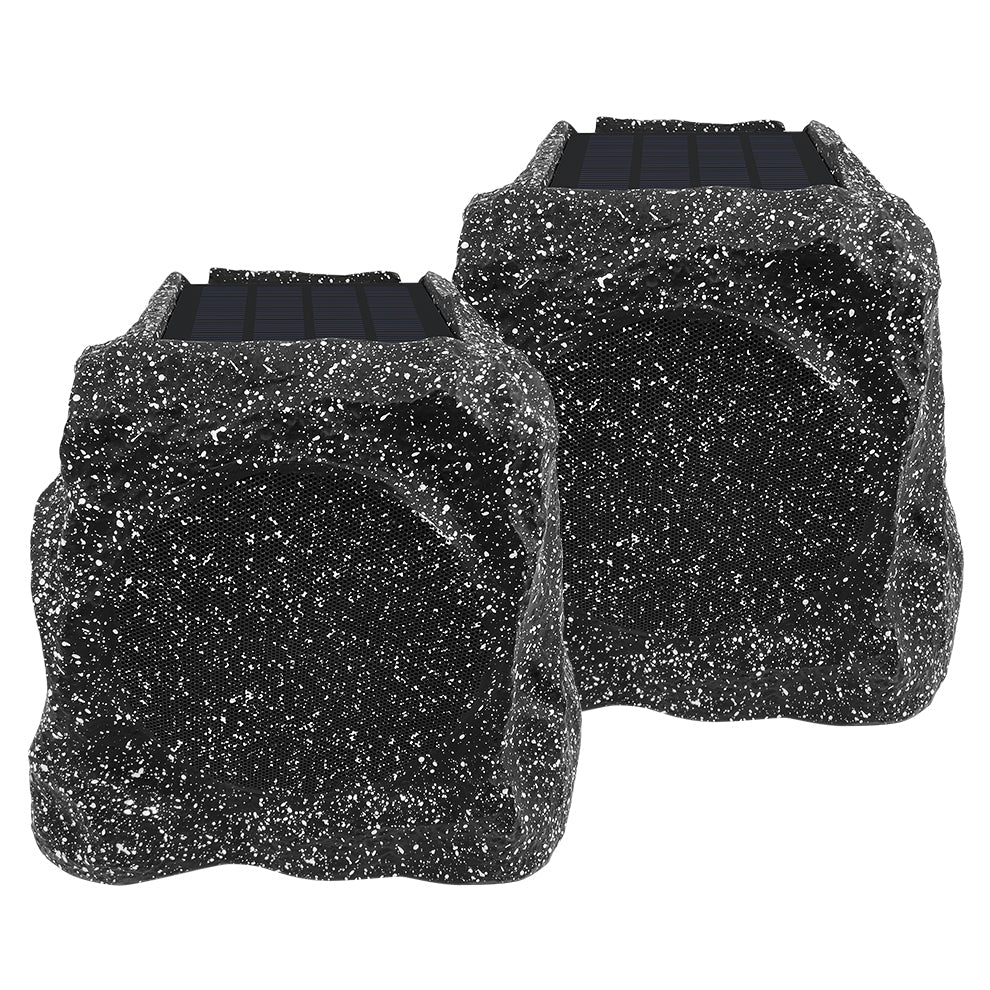
For listening areas away from the building, rechargeable landscape speakers can reduce trenching and outlet requirements. The Herdio 8-inch Solar Bluetooth Rock Speaker Pair combines Bluetooth streaming, rechargeable power and garden-friendly placement.
Step 3: Decide how many speakers you need
There is no universal speaker count because outdoor spaces vary in shape, background noise and listening distance. Use these principles:
- Compact patio: one correctly aimed pair is often sufficient.
- Long deck or wide patio: use multiple speakers to reduce volume differences from one end to the other.
- Large yard or pool area: distribute speakers around the perimeter or along the main listening zones.
- Separate spaces: treat the patio and distant garden as different zones instead of forcing one pair to cover both.
More speakers at moderate output can produce a more comfortable result than a small number playing very loudly. It also gives you more control over where sound travels.
Step 4: Position and aim the speakers
Keep sound directed toward listeners
Mount or place speakers so they face the main seating area and away from neighboring properties whenever practical. Opposing speakers can create consistent coverage, but avoid aiming them directly at each other over a very short distance.
Use elevation strategically
Wall-mounted speakers should be high enough to stay clear of traffic while remaining serviceable. Angle them slightly toward the listening area rather than sending most of the sound above people's heads.
Place landscape speakers on stable ground
Rock speakers should sit on a firm, well-drained base. Keep them clear of low spots, irrigation spray patterns and areas where leaves or mulch will accumulate. Test their direction before making the placement permanent.
Avoid extreme spacing
If speakers are too close together, coverage overlaps unnecessarily. If they are too far apart, listeners may hear one side much more strongly or encounter quiet gaps. Start with symmetrical positions around the listening zone and adjust after a real-world test.
Step 5: Understand power ratings
Peak wattage is useful for identifying a product family, but it does not describe everyday loudness by itself. Driver size, sensitivity, amplifier design, enclosure, placement and listening distance all influence the result.
For a reliable system:
- Use the recommended amplifier and wiring configuration.
- Do not assume a larger peak number automatically means better sound.
- Choose enough speakers for coverage instead of relying on maximum volume.
- Allow clean headroom rather than operating the system at its limit.
- Follow the product manual for impedance and channel connections.
Step 6: Plan power, amplification and wiring
Before installation, make a connection diagram that shows the audio source, amplifier or powered speaker, power outlet and every speaker cable. Label left and right channels and identify where cables enter the building or protected equipment area.
Use cable and connectors suitable for the installation environment. Protect exposed runs from UV, moisture, sharp edges and accidental damage. Maintain consistent polarity on wired speakers so the system plays together correctly.
If electrical work, wall penetration or buried cable is required, follow local rules and use a qualified installer where appropriate.
Step 7: Design for weather and maintenance
Outdoor-rated speakers still benefit from thoughtful placement. Under-eave mounting can reduce direct exposure for wall speakers. Landscape speakers need drainage and clearance from soil buildup. Amplifiers and power supplies should remain in the environment specified by the manufacturer.
Plan access for seasonal inspection. Check mounting hardware, cable jackets, terminals and seals after severe weather. Clean speaker surfaces with methods approved for the product rather than using high-pressure water.
Three example layouts
Layout A: compact patio
- Two wall-mount Bluetooth speakers.
- One speaker on each side of the seating area.
- Both aimed inward at moderate volume.
- Power and connecting cable routed along a protected wall or eave.
Layout B: patio plus garden
- A wall-mount pair for the patio.
- A separate rock-speaker pair near the garden or pool zone.
- Independent control if the two spaces are used differently.
- Placement chosen to direct sound back into the property.
Layout C: large entertaining area
- Four wall-mount speakers distributed around the perimeter.
- An amplifier in a dry, accessible location.
- Shorter listening distances and moderate output at each speaker.
- A commissioning test from every seating and activity area.
Installation-day checklist
- Confirm every speaker, cable, bracket and power component is present.
- Temporarily place or hold speakers in their planned positions.
- Test Bluetooth range and source control from normal use locations.
- Play familiar music at low to moderate volume.
- Walk through every listening zone and note quiet or overly loud areas.
- Adjust aiming and balance before drilling final holes or burying cable.
- Secure all hardware and protect connections.
- Save the system diagram and product manuals for future service.
Frequently asked questions
How many outdoor speakers do I need for a patio?
A compact patio often works well with one pair. Wide, long or divided spaces may need four speakers for more even coverage. Base the count on listening zones and layout rather than square footage alone.
Where should an outdoor amplifier go?
Place it in the dry, ventilated and accessible environment specified by the manufacturer. Confirm power access and keep cable runs organized for future maintenance.
Should outdoor speakers face the house or the yard?
Aim them toward the listeners and, when practical, back into your property. This can improve clarity in the listening area and reduce unnecessary sound beyond it.
Can I mix rock and wall-mount speakers?
Yes, especially when a property has a patio next to the house and a separate garden or pool zone. Confirm that amplification, impedance and control are compatible, or use independent systems for each zone.
Is Bluetooth enough for a large backyard?
Bluetooth can be a convenient source connection, but speaker distribution determines coverage. A large space may still need several wired speakers connected to a Bluetooth-enabled amplifier or more than one independent system.
Build the system around the space
The best outdoor audio plan begins with where people listen, not with a specification sheet. Map the zones, select an appropriate system architecture, distribute speakers for even coverage and verify every power and cable requirement before installation.
Browse Herdio outdoor speakers to compare Bluetooth pairs, multi-speaker packages and landscape-friendly rock speaker systems.