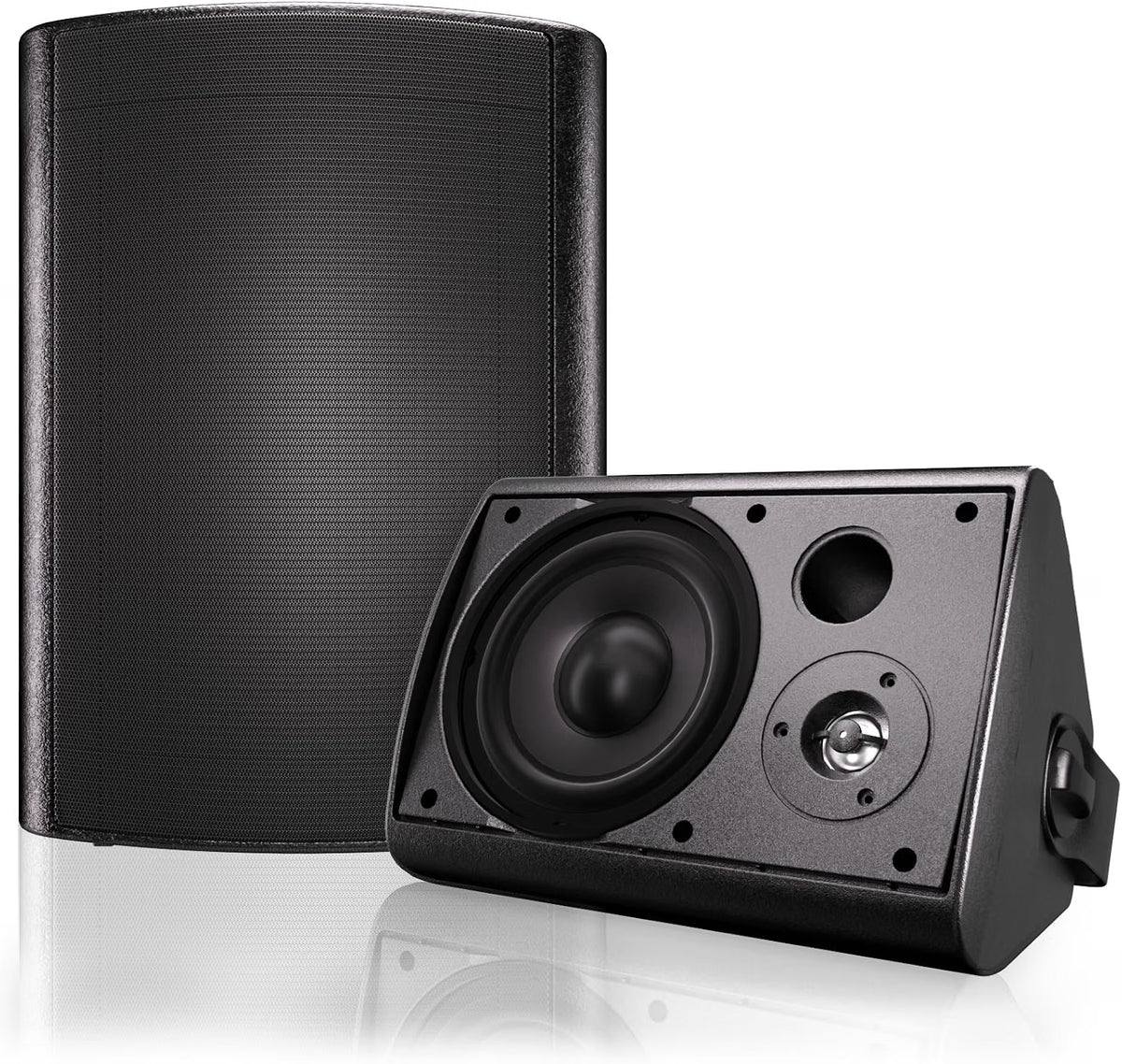


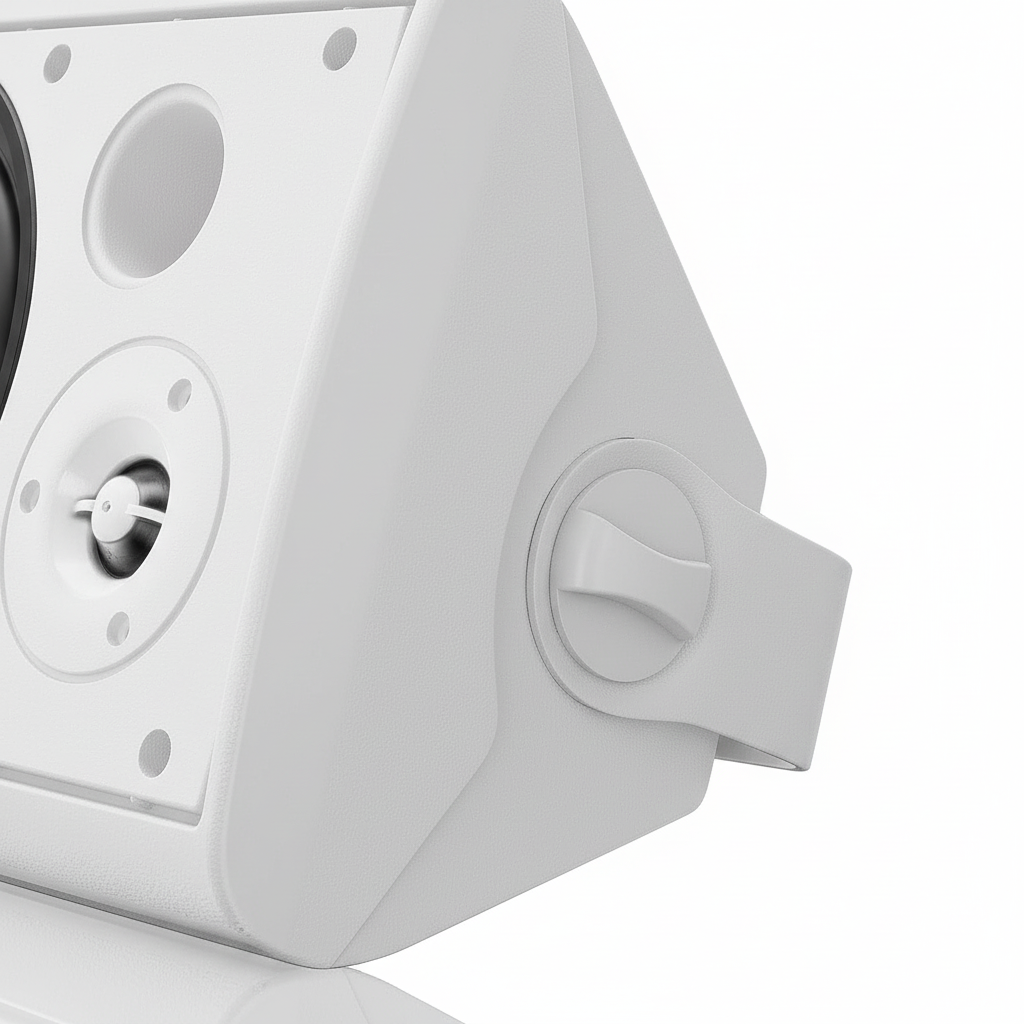
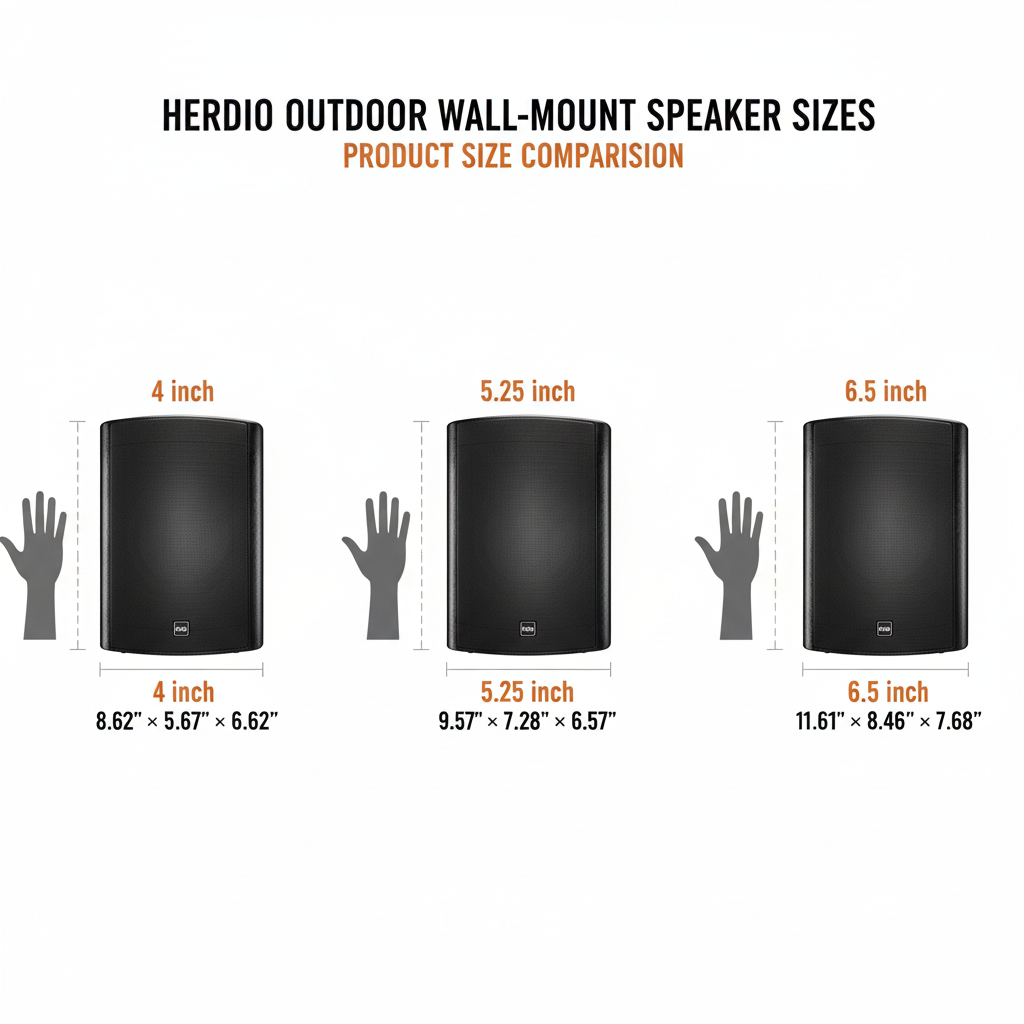
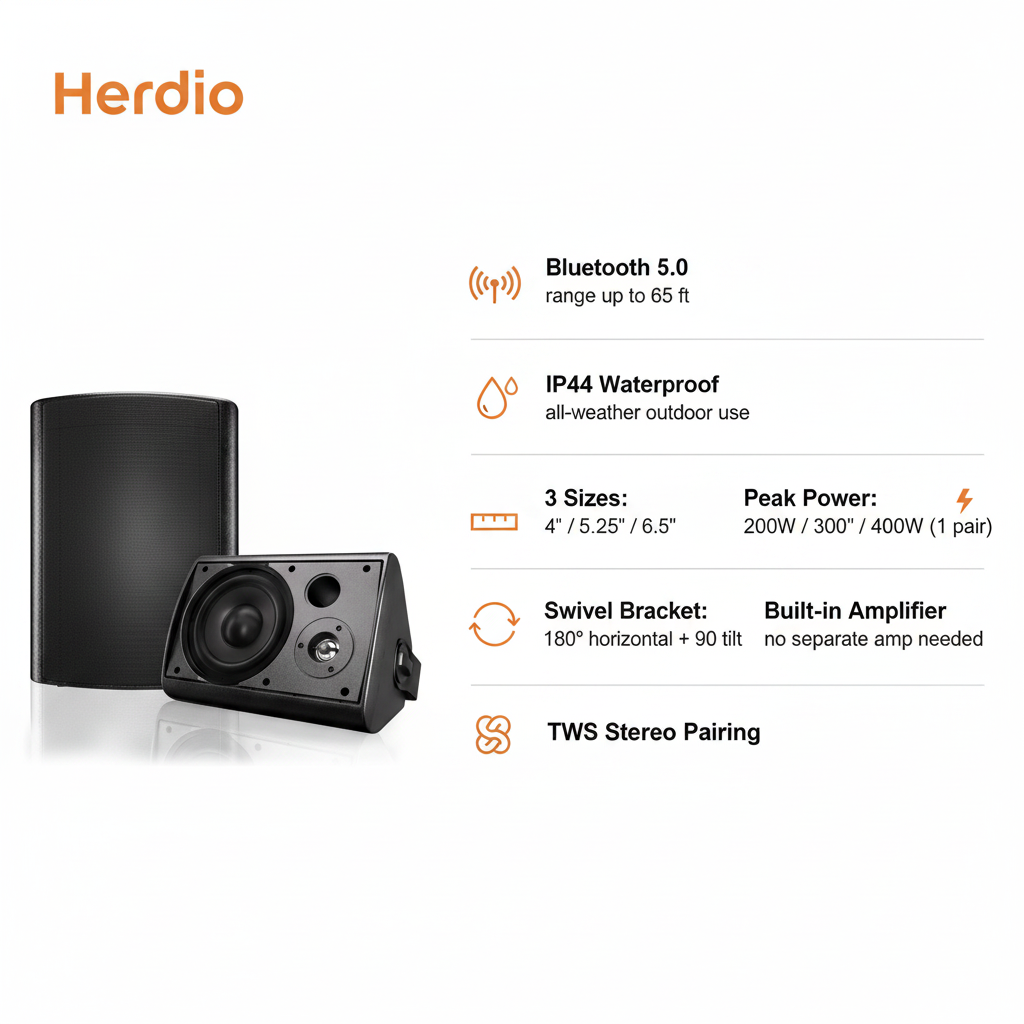
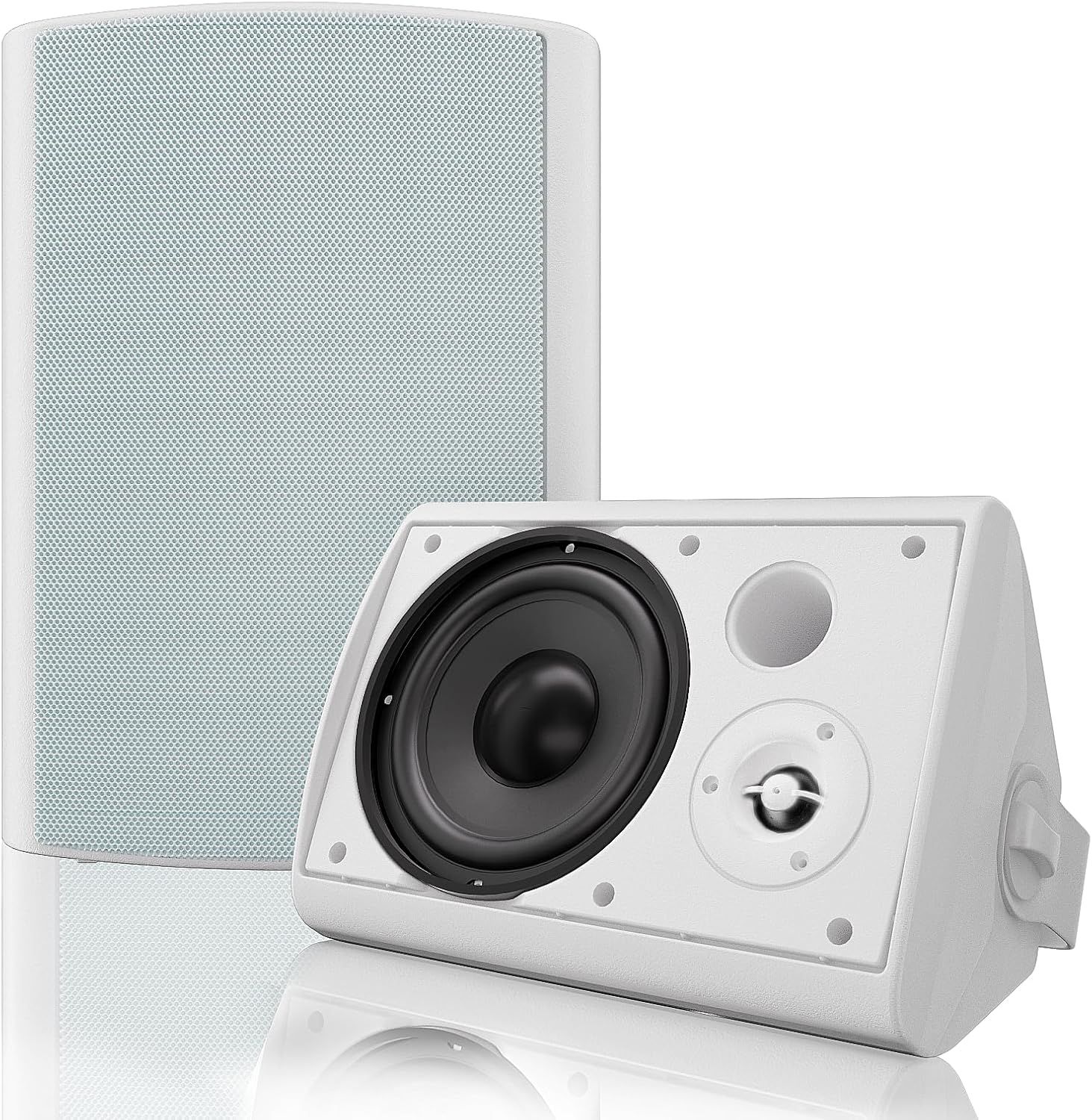
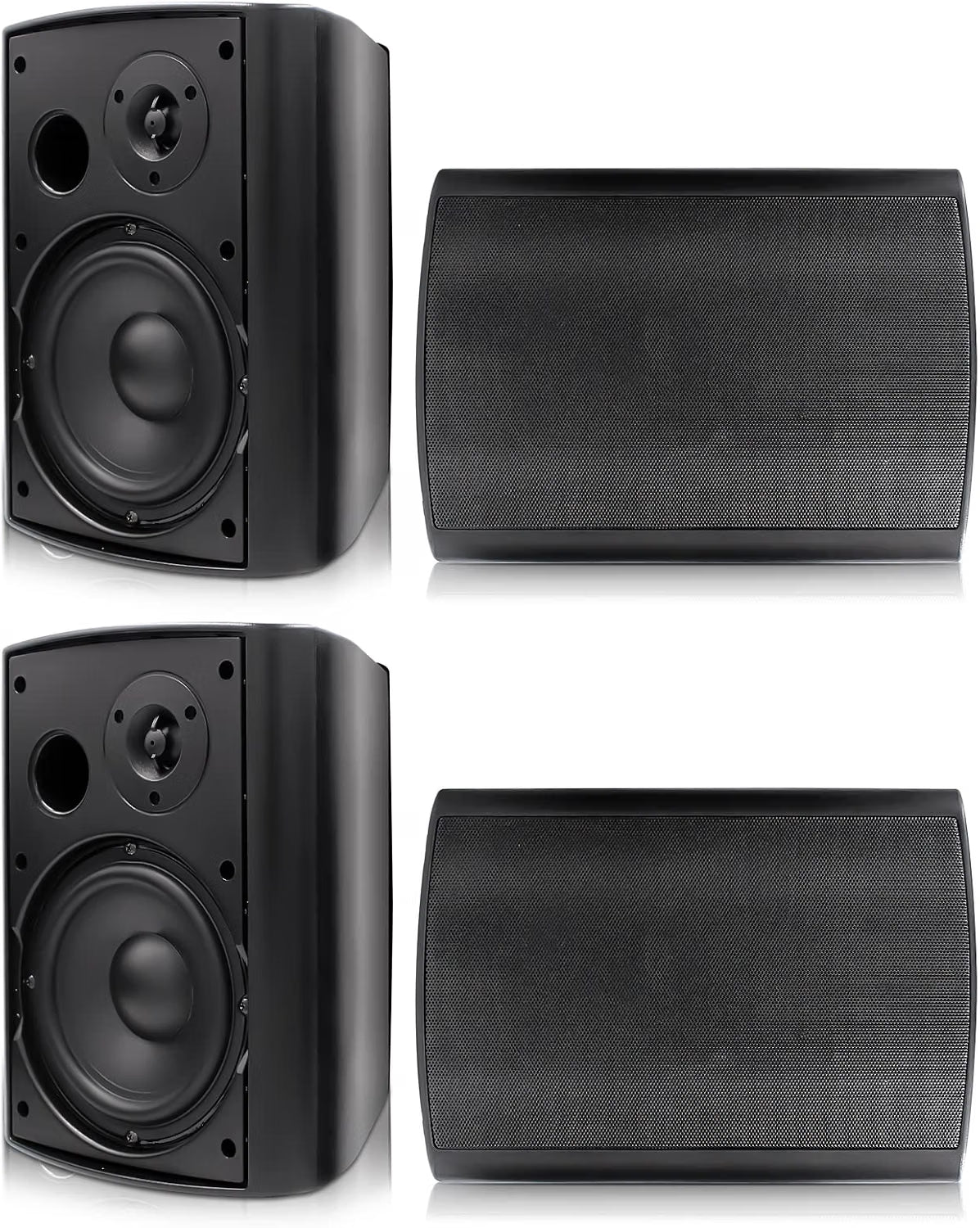
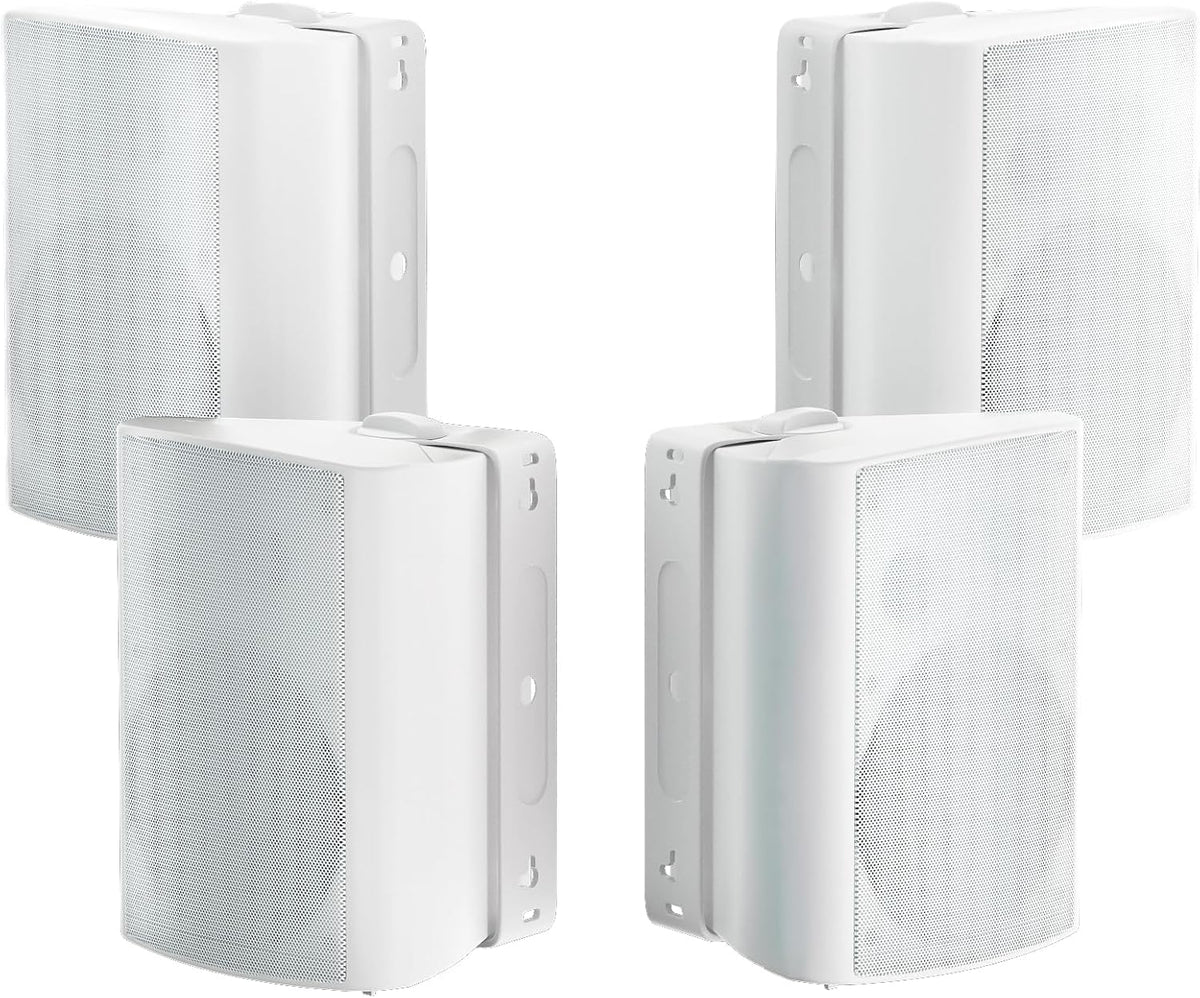
Why should you trust this review? My profession involves signal analysis and design for outdoor radar that has to survive severe weather mounted to towers a hundred and fifty feet high on a tower, and I read the Loudspeaker Design Cookbook 30 years ago.The speakers sounds decent in mid and upper ranges, but it doesn't hit hard on the bass, which may be expected for the smaller size and low displacement driver. That's the highlight. OK, bluetooth connection was easy, too. Bluetooth 5.3 means it can connect with high quality audio.That's the positives. Let's get into the weather'proof' claim for the rest of this review.Is it really an outdoor speaker? Let's examine this claim.1) The interconnection wires are extremely narrow gauge (0.5mm^2 / 20 awg) and exposed to the environment. Say you point it down from a high mount (as the manual suggests and really should mandate as I describe later), the connectors are directly exposed to dew and weather. The maximum voltage is sqrt(150 watts x 4 ohms) or 20 volts for 4 inch, 24.5 volts for 5 inch, 28.8 volts for 6 inch, running which are just barely below 30 volts DC exposed for wet locations (some codes call for 15 volts ac, which would be about 21 volts peak). Pushing it -- mount it high off the ground to avoid potential shocks if it is cranked up. It might use a class B push-pull amplifier or charge pump in order to reach that power output (with a DC 12, 15, and 24 v input you can double the total peak to peak voltage which is probably their basis from peak watts, rather than RMS watts). So this means their RMS current (28.8 volt/4 ohm times 'root 2 over 2' or 0.707 = about 5 amps) will be just at the 5 amps acceptable for their provided 20 gauge wire (although the input adapter is only a third of the max power so it's not going to be able to really pull the full rated power for long). Due to exposed wiring, I suggest not actually mounting these in true 'wet' locations -- just 'damp' such as under a cover.So it seems mostly safe if you mount it with protection from driving rain. If you want to be extra safe, drill a tiny hole on the bottom after mounting to allow drainage for accidental water ingress in the open port, especially of you mount the grill with the open port facing up (which I wouldn't ever do). More on this next.2) The electronics are visible through the bass port indicating it's not sealed and exposes the inside to humid atmosphere. This isn't required if you: a) use enclosure stuffing to dampen standing waves and fully seal the enclosure and/or b) use a passive membrane that can vibrate in opposition to the active driver.This device uses some type of polyfill for stuffing as seen in the blue light photo. It doesn't appear to be very well filled hence why I can still see the blue LED. It looks like the circuit board does have a conformal coating to handle damp conditions but it's hard to tell for sure through the grill.3) Lastly, the power adapter. Mine is the 5 inch so it comes with a 45 watt 15vdc adapter. The adapter only has a 3 foot connector at the end so where is this supposed to go? It has 120v *and* it is rated for indoor use only. So you have to encase it in a NEMA box or seal it with silicone sealant for safety? Seriously?The audio quality is passable so no star demerits.I'm going to take half a star off for the non-sealed design, with lack of weep holes since it is non-sealed.I'm going to take another half star off for the exposed interconnect wiring.That's one total star for design features that make the speakers themselves only damp capable, not wet capable. Keep them covered from rain.I'm going to take a full star off for the short distance to the indoor only power brick. That I think will be a deal breaker for most people that do want to use this outside.3/5 stars. They can immediately get one star back by providing a longer wire for the power brick or making it outdoor rated or at least a little bit better sealed with a dessicant packet. The other star would necessitate a full redesign or a note that they are for damp not wet locations only. Weatherproof to rain or snow they are most assuredly not. They are merely weather resistant. In English speaking countries weatherproof is a much stronger designation than weather 'resistant'. Casually mentioning to use an overhang and to point them down in the manual does not fix the use of 'proof' in the advertising. If the description and manual were updated with the more accurate language, they can get one full star back. Fixing the power brick to something a little more substantial for outdoor use gets the other star back. I'm going to have to use some protective mods to the power brick to safely install this in my own home.