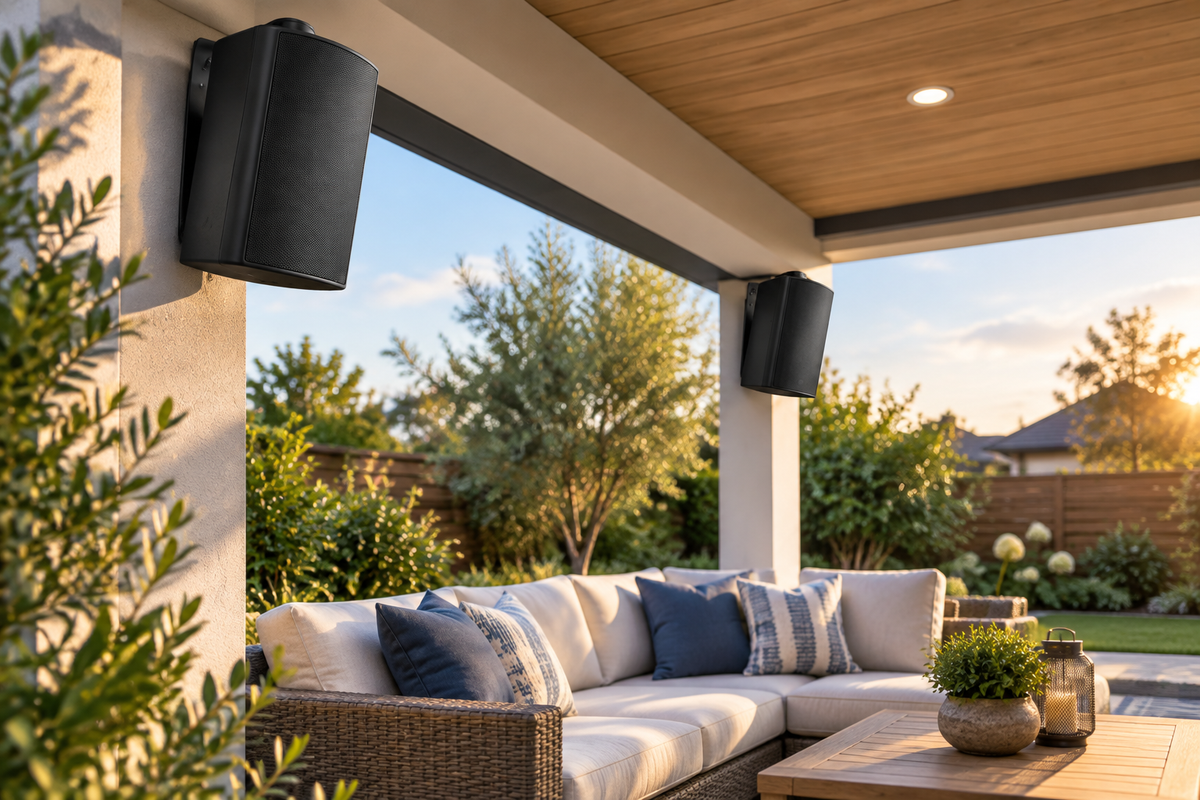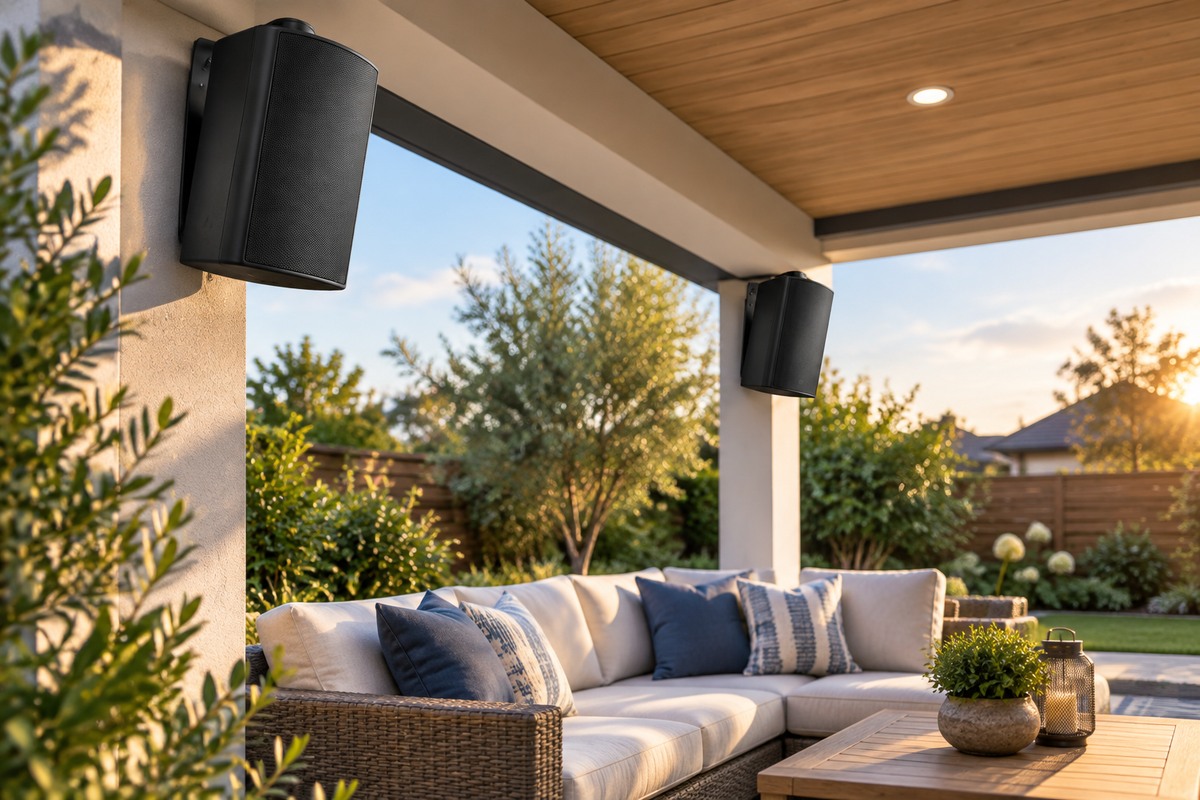
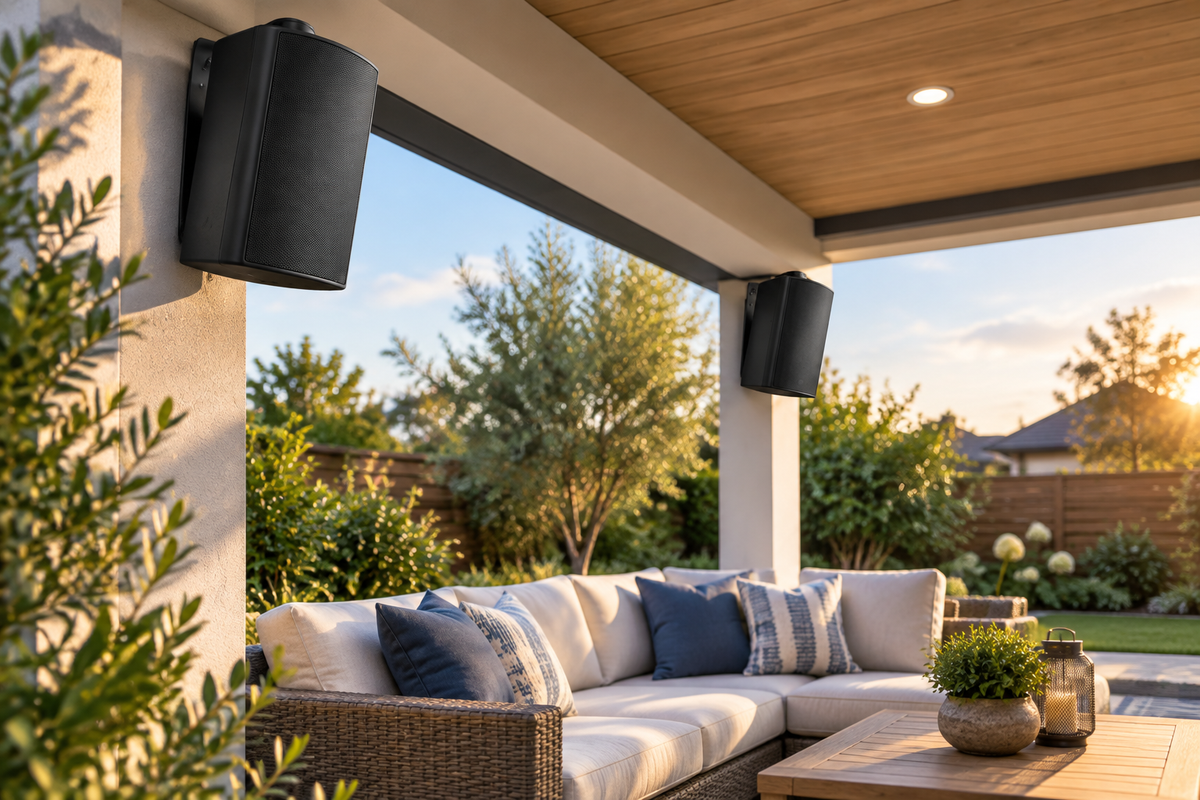
When patio season slows down, your outdoor audio system deserves a quick inspection. Leaves, dirt, moisture and changes in weather can affect mounting points, exposed cable and connections, even when the speakers themselves are designed for outdoor use.
This guide provides a practical seasonal maintenance routine. It is not a blanket claim that every outdoor speaker can remain outside through every winter. Always follow the environmental limits, cleaning instructions and storage guidance for your exact model.
1. Check the Whole System, Not Just the Speaker Cabinet
An outdoor system includes more than speakers. Identify the amplifier, power adapter, outlets, speaker cable and connection points. Each component needs protection suitable for its own installation.
A speaker enclosure's weather rating does not automatically apply to its power adapter or amplifier. Bluetooth also does not remove the need for power and, in many packs, speaker wiring.
Herdio's Bluetooth outdoor wall-mount range uses active/passive arrangements in one-pair packs and a separate amplifier in two-pair packs. The passive outdoor range requires an external compatible amplifier or receiver. Check the exact pack before deciding what should remain installed or be stored.
2. Power Down Before Inspecting Connections
Switch off and disconnect system power before touching speaker terminals or cable connections. Do not handle wet electrical plugs. If a circuit trips, insulation is damaged, equipment smells unusual or electronics show signs of water ingress, stop using the system and arrange qualified assistance.
Do not open sealed cabinets or powered equipment as part of routine maintenance. If a component needs internal service, use an appropriate service channel rather than trying to dry or repair it yourself.
3. Inspect Mounts and Brackets
Look for loose fasteners, movement at the bracket, corrosion or damage to the mounting surface. A speaker should be supported by a sound structural fixing, not by its cable.
Check that the selected angle is still secure and aimed toward the listening area. Tighten or service hardware only as allowed by the installation instructions. Do not overtighten adjustments or replace specified hardware with an unsuitable substitute.
If access requires a ladder or the mounting point is difficult to inspect safely, ask an installer to perform the check. Do not pull on the speaker from below to test the bracket.
4. Clean Gently
Follow the manufacturer's cleaning guidance. Where permitted, use a soft cloth or soft brush to remove surface dust and loose debris. Avoid pressing on drivers or pushing dirt through the grille.
Do not use a pressure washer, hose the speaker down or assume a weather-resistant enclosure can be submerged. Avoid solvents, abrasive cleaners and unapproved sprays. Do not remove a grille unless the model's instructions permit it.
Keep openings and the surrounding mounting area free of leaves without modifying seals or drainage features.
5. Examine Speaker Cable and Entry Points
Trace the visible cable route and look for cracked jackets, abrasion, pinched sections and loose clips. Check that cable is supported without being pulled tight at the terminals.
Inspect accessible connection protection and exterior wall-entry seals. A weather-resistant speaker cannot compensate for an exposed or damaged connection. Have unsuitable cable or deteriorated protection replaced using materials appropriate to the route.
Do not leave a temporary tape repair exposed to weather or assume that conduit makes ordinary indoor cable suitable outdoors. If a route is buried or concealed, use a qualified installer for work that needs access or changes.
6. Decide Whether to Leave Speakers Installed
Base this decision on the exact model's documented operating and storage limits, the exposure at the mounting location and your local conditions. An ingress-protection rating addresses specified protection against solids and water; it is not a complete statement about freezing temperatures, snow loading or long-term exposure.
If the documentation does not establish suitability for the conditions you expect, ask the manufacturer before leaving equipment outside. Do not invent a minimum safe temperature or treat a general weather-resistance description as an unlimited guarantee.
A sheltered position under an eave can reduce direct exposure, but it does not make every component suitable for every season.

Herdio Passive Outdoor Speakers
Wired wall-mount options in 4-inch, 5.25-inch and 6.5-inch sizes. A compatible external amplifier is required and is not included. Review your chosen variant's installation guidance and keep the amplifier appropriately protected.
7. Store Removable Equipment Carefully
If seasonal removal is recommended or appropriate, photograph the connections and label cables before disconnecting them with power off. Support the speaker while releasing it from the bracket, following the manual.
Store equipment in a dry location within its documented storage limits. Do not seal damp equipment in a bag or power it up to try to dry it. If water ingress is suspected, arrange assessment before using it again.
Protect any wiring left outside using a method appropriate for the equipment and location. Do not leave bare conductors or unsecured cable ends exposed.
8. Restart with a Low-Volume Test
Before the next season, inspect stored equipment and the installed wiring again. Reconnect according to your photographs and the manual, keeping polarity consistent.
If equipment has been moved from cold storage, follow the manufacturer's acclimation instructions before powering it. Once ready, start at low volume and confirm every speaker plays clearly. Increase volume gradually while checking for distortion or intermittent sound.
Recheck the listening angle after any remounting. If the layout changed over winter, adjust the speakers toward the new seating area rather than compensating with excessive volume.

Herdio Bluetooth Outdoor Speakers
For phone streaming with the amplification arrangement supplied in your selected pack. Check which components need power, speaker cable and separate protection before planning seasonal storage.
Frequently Asked Questions
Can outdoor speakers stay outside all winter?
That depends on the exact model's documented limits and the installation conditions. Check the manual or contact the manufacturer; the term outdoor alone is not enough.
Should I wrap installed speakers in plastic?
Do not improvise a sealed wrapping that can trap moisture or obstruct the equipment. Use only protection appropriate to the product and follow its instructions. Do not operate equipment under an unapproved cover.
Does the speaker's weather rating cover its power adapter?
No. Treat the adapter, amplifier, connections and speaker enclosure as separate components with their own requirements.
Your Seasonal Checklist
- Review the exact model's environmental and storage limits.
- Disconnect power before checking connections.
- Inspect brackets and mounting surfaces safely.
- Clean gently using the approved method.
- Check cable jackets, clips and connection protection.
- Protect adapters and amplifiers separately.
- Label connections before seasonal removal.
- Test at low volume before returning to normal use.
A short seasonal inspection is a practical way to catch mounting and wiring issues before your next patio gathering. Make care decisions for the whole system, not just the speaker cabinet, and follow the documentation for the equipment you actually own.